DIY tDCS Start Here

Featured

Update 3/13. Dear Readers, my living/work situation is in the process of a major disruption. Not necessarily a bad thing-kind of exciting really, however my wealth of spare time has taken a direct hit. I will be updating the site periodically but it could be some months before I’m all the way back. I am monitoring breaking tDCS info and will be sure to post any major discoveries. In the meantime, there is a wealth of current tDCS information on and linked to here, literally weeks of reading. Before jeopardizing the health of that most precious organ, your brain, please consider becoming a tDCS ‘expert’.

New to DIYtDCS? This is the ‘start here’ collection of articles and posts.

  1. tDCS SubReddit is where the action is.
  2. Marom Bikson Presentation on State of the Art tDCS (YouTube)
  3. johnboy6785′s Off-the-shelf tDCS setup with links (Reddit)
  4. Dr. Brent Williams’ DIY device and protocol.
  5. Zap your brain into the zone: Fast track to pure focus
  6. Better Living Through Electrochemistry
  7. Clinical tDCS trials seek volunteers. All. Search. (Example: “tDCS AND Los Angeles”)
  8. Go deep! ATA at Brmlab continues to develop his tDCS page.
  9. Neuroscience: Brain buzz Nature Magazine

flattr this!

News from GoFlow! Good and Bad

From the people at GoFlow…

Some sad news.

And some good news too.

As most have you have probably noticed, we haven’t made much progress on the GoFlow project in the last 6 months. We hit some obstacles, both in the business and in our personal lives, that kept us from making the progress we wanted.

We love tDCS and can’t wait to see it become available to everyone. Unfortunately, it looks like we won’t be the people making that happen. However, our friends at Foc.us have just launched and offer a great alternative.

Thank you all for your incredible support throughout the last year, we wish we could have successfully gotten GoFlow into your hands.

Some exciting news!

Our friends over at foc.us have just launched, and they have devices for sale!

We wanted to make sure to leave you with an alternative.

We’ve been in contact with the guys over a foc.us for quite awhile now. They’re some pretty awesome folks who are incredibly smart.

They just started selling their tDCS device last week, and have a limited quantity available. They have achieved much of what we were attempting to, and we’re really excited to see where they go.

Check out the Foc.us tDCS device!

via News from GoFlow! Good and Bad.

flattr this!

FOC.US – transcranial direct current stimulation for gamers

The Foc.us Has Landed!

  • Is foc.us FDA approved? No. The focus gamer headset offers no medical benefits, is not a medical device, and is not regulated by the FDA.
  • When will my headset ship? If ordered today your headset should ship by the end of July 2013. Subsequent production orders are scheduled from October 2013.
  • Will Android be supported? Yes, we are fully committed to providing Android support as soon as Android contains the required bluetooth 4.0 apis. We ♥ Android.
  • Is the headset safe? The focus headset has been tested to all required regulatory standards including CE Safety standard EN60601-2-10: 2001 and EN60601-1: 2006.
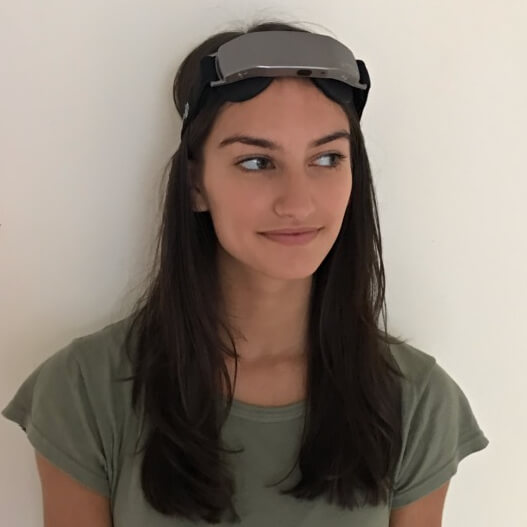
  • What does the headset do? The headset passes a small electric current <2.05mA through the prefrontal cortex of the wearer.
  • Who should not use foc.us? The headset is not a toy, is not recommended for under 18s, epilepsy suffers or people with implants. It should not be used in the treatment of any medical conditions.

via FOC.US – transcranial direct current stimulation for gamers.

flattr this!

Introduction to Transcranial Direct Current Stimulation (tDCS) in Neuropsychiatric Research

June 3-4, 2013 at the Institut Guttmann in Barcelona, Spain

Transcranial Direct Current Stimulation (tDCS) is a technique of noninvasive brain stimulation established nearly 75 years ago. Today, tDCS is seeing a resurgence in both the clinical and academic research fields. Through lectures and hands-on practice, this course will introduce students to the theoretical aspects of tDCS and help develop proper skills for practical application.

Registration

To register for this course, first complete the online application on the Berenson-Allen Center website. You can access the online application here.

via Berenson-Allen Center for Noninvasive Brain Stimulation.

flattr this!

Insight, a growth project driven by tDCS: The Biocurrent kit is currently available!

The Biocurrent kit is a safe, easy-to-use, apparatus that supplies regulated current through sponge electrodes. By using a unique method of regulation (CRDs), the Biocurrent kit provides regulated current at 1.0mA, 1.5mA, and 2.0mA in a simple to use plug in kit. No soldering is required, all the items necessary to produce biological current are included in the kit (Battery pack, Regulator boxes, cables, sponge electrodes, and elastic band to fix to the body).

For increased safety the cable connectors are specifically chosen to only fit one way and because of inline resistor, current is limited in case of short or failure.

Go to The Biocurrent kit site to find out more and to purchase your device.

via Insight, a growth project driven by tDCS: The Biocurrent kit is currently available!.

flattr this!

Just for Fun: tDCS in a Bottle | SpeakWisdom

I decided to borrow Keith’s design one more time and build a simple tDCS device into an old pill bottle, just to show how easy it is to build a current regulated tDCS device – and to show how small they can be. My latest creation could easily be carried in a pocket or tucked in a hat. I call it “tDCS in a Bottle” and yes – I decided to copyright the name – hey why not?

My simple circuit consists of a type 25A 12v volt battery, a 2.2 k Ohm resistor, a current regulating diode (CRD), a pill bottle, and some lead wires. You could build one yourself in 15 minutes or less!

via Just for Fun: tDCS in a Bottle | SpeakWisdom.

flattr this!

Enter the Biocurrent Kit | Speak Wisdom

www.biocurrentkit.com has just started offering a battery operated 1 to 2 mA kit that is offered not as a tDCS device (tDCS doesn’t even appear in their instruction sheet and barely on the web site), but as a regulated very low current DC supply. What you do with it is up to you. Biocurrent sent me an evaluation unit to dig into and I have to say, I’m impressed with the simplicity of the kit – and that it does exactly what Biocurrent says it will do – supply 1, 1.5, or 2 mA current.

via SpeakWisdom | Speak Wisdom.

flattr this!

tdcs LM334 Ramping capacitor – possible problem

Petr, whose first language is Czech, asks…

12.3 2013
Ramping capacitor – possible problem
Yesterday i was building some tDCS with LM334 and try for first time use ramping capacitor. When i test device with load (5KOhms) all was ok ramping when i turn device on and ramping down when off. But when i change load (5kOhms potentiometer) during stimulation (testing) it create current peak up to 5 mA. I test it with few different capacitor and behavior is always the same (only different value of peak and the time to return to normal ). Device without capacitor work without problem. In result of this i use instead of capacitor serial load ( linear potentiometer 100kOhms ) allows me to do manual ramping (0,07mA to setup current).

My question is can anybody test this capacitor problem maybe i do something wrong, bad multimeter etc.. . If this problem is real,  it’s a very bad idea to use capacitor for ramping in use the resistance change is not too quick but still can cause pretty high current peaks.

flattr this!

tDCS and rTMS: Is brain stimulation safe and effective? – Slate Magazine

Well-balanced and chock full of relevant links. Check out the full article.

Almost every expert who talks about tDCS will tell you, “Don’t try this at home.” But a lot of people are starting to do just that. And it’s no wonder, given the parade of amazing results that researchers have reported achieving on subjects in the lab. It seems like you can make people better at just about anything if you just put the electrodes in the right place. To name just a few of the findings:

Applying the electrodes to the prefrontal cortex can improve learning and increase your working memory.

Applying them to the motor cortex can raise your threshold for pain and make you more adept with your nondominant hand.

Position them above the posterior portion of the left perisylvian area (in right-handed people) and they can facilitate language acquisition.

Stimulation of the parietal cortex can improve numerical reasoning.

via tDCS and rTMS: Is brain stimulation safe and effective? – Slate Magazine.

flattr this!

Marom Bikson lecture “Non-invasive brain stimulation: mechanisms, effects and opportunities”

Unfortunately, the quality of these videos is quite poor (always use a tripod, always get a direct audio feed of the lecture ;-) You can download an enhanced audio-only mp3 of the lecture here.

Prof. Marom Bikson of the Department of Biomedical Engineering at The City College of New York lecture on March 13, 2013 at the: Symposium at the the 10th Göttingen Meeting of the German Neuroscience Society.
“Non-invasive brain stimulation: mechanisms, effects and opportunities” introduces fundamentals of tDCS mechanisms and dose including how to achieve targeting using brain stimulation.
Continue the discussion here or on the lab http://neuralengr.com/forums/ or Soterix forums http://soterixmedical.com/community/

flattr this!